Basic Guide to Inventory Software

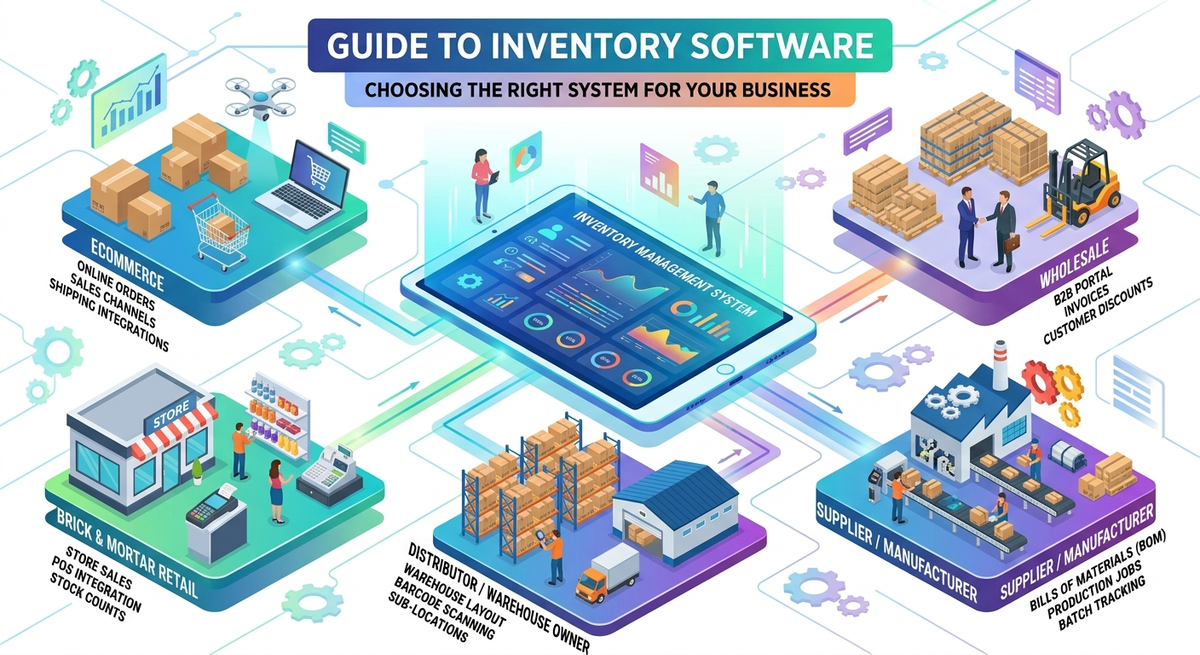
First, you need to determine what type of business you are.
You may be one or more of the following:
- Ecommerce
- Wholesale
- Brick and Mortar Retailer
- Supplier/Manufacturer
- Distributor
Determine how many staff you have at your company; ideally this would give a gauge of revenue as well.
- Just yourself
- 2 people
- 2-10
- 10-20
- 20-50
- 50-200
- 200-500
- 500+
It's pretty likely if you are here, you wouldn't be past 50 plus staff members, since they typically hire a development manager to make this decision. If you are that development manager, or that poor employee that has been tasked to scope inventory/mini-ERP software, then I'll still give you some options.
Ecommerce
The most important thing for ecommerce is ensuring that:
- Things aren't out of stock (at least on the site)
- Customers receive orders quickly, and correctly
- If orders cannot be received quickly, that at least order transparency exists.
Therefore, you should look for software that has:
- Reorder notifications
- Safety stock numbers (lowest quantity of inventory per product at any given time)
- Shipping integrations (labeling, getting rates, customer updates)
- Integrations with your sales channels
Prioritise simplicity over features, to ensure that your team can actually use the software chosen.
Wholesale
If you are selling to businesses, you want to make placing orders as easy as possible. Typically this could be in the form of a B2B online portal, however, I'd recommend you be flexible, as most businesses will likely order via email, WhatsApp or everything outside the portal because it's 'easier'.
Ideally, the system you choose can:
- Create invoices and send them to your desired accounting software
- Have discounts, ideally specified by customer groups for simplicity
- If you do consignment selling, ensure that you can create multiple locations in the system, hold inventory at their location, and create sales orders which will remove inventory from their specific location.
Brick and Mortar
Inventory should be straightforward for brick and mortar businesses, unless other channels such as ecommerce and wholesale are also included.
Ensure that:
- System will integrate with your POS
- You can do stock counts and cycle counts
Supplier/Manufacturer
This one is painful. Depending on how long your manufacturing methods are, you may need a production management system, which allows you to schedule and attach jobs to specific machinery like a kanban chart.
Otherwise, what you need is inventory software which allows for BOMs (bill of materials), to consume inventory into parent items when 'built'.
If you are dealing with food & bev, you'll also likely need batch tracking and expiry dates to ensure you are in compliance with standards.
If you deal with a lot of 'custom-made' items, where the bill of materials aren't specific, then you will need a system that has flexible assemblies.
Costing for goods during assembly creation is ideal, and the ability to introduce additional costs such as labor would be great.
Distributor/Warehouse Owner
If you're a distributor, you likely have an array of goods from various brands, and therefore you require enough space (or a 3PL) to ensure you can meet the demand of your own product catalogue.
- Barcode scanning is a great way to make things simpler.
- Being able to have sub-locations in your warehouse becomes a necessity during large scale.
Example Systems for Businesses
Now if you have a look at this account, it's called 'lecxa-jaden', so obviously there is going to be some natural bias towards that particular small inventory management software. But here's a generic guide based on what systems do well, and what systems don't.
(Also comment below other systems if I've missed them.)
Micro-E-commerce
1-2 people, packed in-house
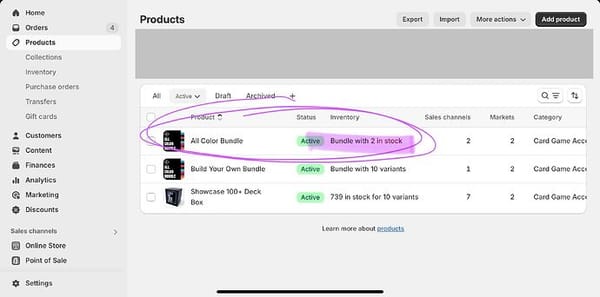
Shopify's basic inventory system should be enough, unless you have bundles, and sell multiple items under one SKU. If you aren't with Shopify, spreadsheets might be enough for you to run your business.
If your volume becomes high enough where that becomes a hassle, then have a look at multi-channel e-commerce options.
B2B/B2C E-commerce
1-10 people, wholesale
This is where you would need a system to hold all orders in one place. Modular software can also work for you, at a lower cost initially, but often requires a lot of development work to ensure the system works well.
Example inventory software/mini-ERP:
- Cin7
- Unleashed
- Lecxa
- Sortly
Modular software that can do inventory management:
- Zoho
- Odoo
Multi-channel E-commerce
Retail POS, wholesale, 3PL to manage items
In this case, inventory software should be essential. The above plus others such as:
- Fishbowl
- Katana
Large Scale Businesses
Multiple brick and mortar stores, wholesale, ecommerce
In these cases, you would likely need an ERP system:
- SAP
- Sage
- Netsuite
- Microsoft Dynamics
However, these systems are old, clunky, and should only be used when it has been established that you need your inventory and accounting software to be in one system.
This is only a generic guide. For specific features and processes, you will likely have to do your own research to determine what fits best for you.